Most faucet trouble in Mesa traces back to hard water wearing on cartridges and seals, especially in the Eastern and Southern zones where the city reports its hardest water. A worn cartridge, washer or O-ring can usually be replaced without changing the whole fixture. Call the number on this page to be connected with a local plumber in Mesa.
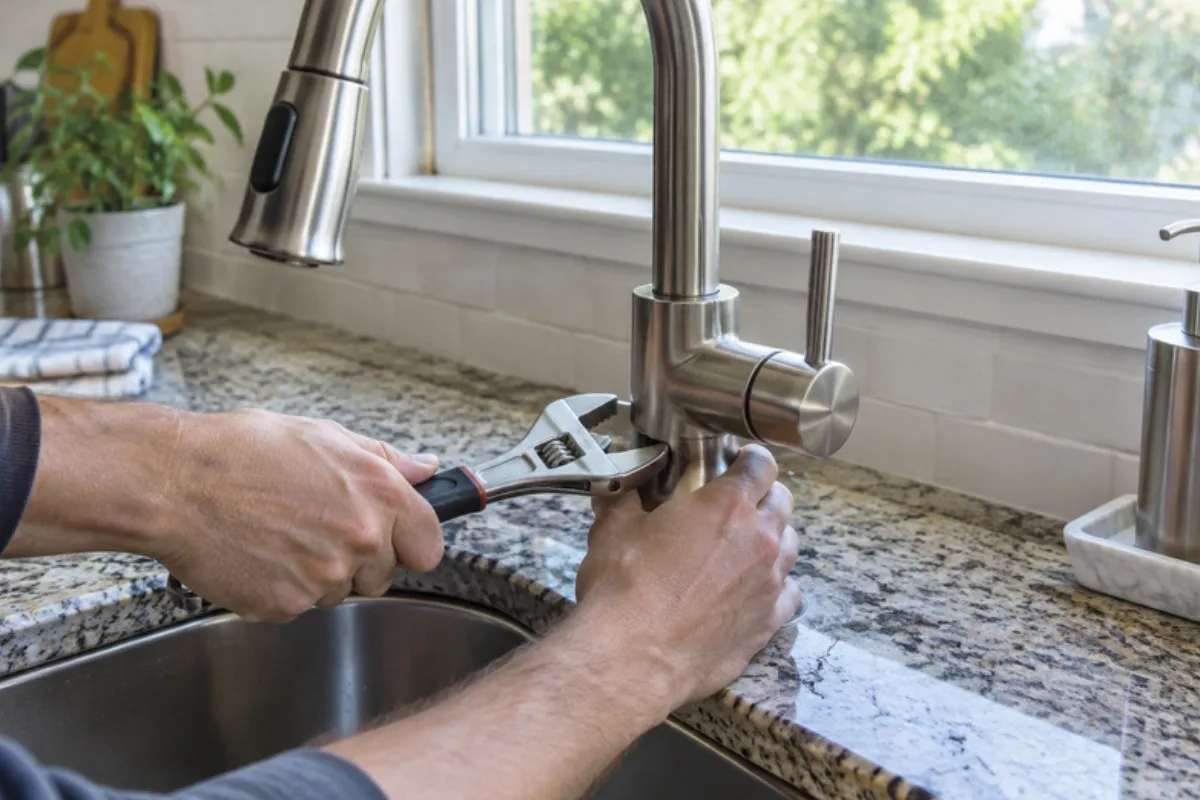
Is your faucet telling you something?
- The spout keeps dripping a minute or an hour after you shut it
- The handle feels gritty, stiff or loose, or takes extra force to close
- Hot and cold no longer blend where they used to on a single-lever faucet
- Pale mineral rings build up at the spout tip, the aerator or the deck plate
- The stream splits, sprays or weakens at one sink while the others run normally
- The cabinet floor is damp, or a supply hose is beaded with water
Faucets and Mesa water
City of Mesa Water Resources supplies both water and sewer across the city, and its water quality report divides the system into a City Zone plus Eastern and Southern Zones. The source differs by zone: Colorado River water through the Central Arizona Project, Salt and Verde River water from SRP, and groundwater from city wells. Hardness differs too. The report lists an average near 12 grains per gallon in the City Zone and near 16 in the Eastern and Southern Zones. Either way, calcium and magnesium settle on cartridge seals and aerator screens, and homes in the harder zones tend to see crusted faucets sooner.
Housing age plays a part. The median Mesa home dates to about 1988, so houses around Downtown Mesa and Main Street may still carry two-handle faucets with rubber washers and brass seats, while subdivisions near Loop 202 and Phoenix-Mesa Gateway Airport mostly have single-lever cartridge models. Washer faucets may need a seat dressed or replaced; cartridge faucets need the exact cartridge for the brand.
If a valve fails and water will not stop, close the stops under the sink or the main shutoff. Mesa lists 480-644-2262 for water and sewer emergencies on the city side of the system.
What drives the price
- Repair or replace. A cartridge, washer or O-ring kit is a shorter job than pulling a fixture and setting a new one.
- Parts availability. Common brands are easy to source; an older or off-brand faucet may mean a parts hunt or a new fixture.
- Scale. Heavy mineral buildup can lock retaining nuts and cartridges in place and add labor.
- Stops and supply lines. Seized angle stops or tired braided hoses are often swapped in the same visit.
- Access. Tight vanities, deep sinks and garbage disposals can slow the work.
When you call
The number on this page reaches a referral line, not a plumbing company. You will be connected with an independent plumber who works in Mesa. Say which faucet is leaking, whether it has one handle or two, and where the water shows up. If you know the brand, mention it. A quick photo of the faucet and the valves underneath helps the plumber bring the right cartridge.
Faucet Repair questions in Mesa
How hard is the water here, and what does it do to faucets?
Could an older faucet or service line put lead in my water?
Will a water softener make faucet parts last longer?
When is it smarter to replace a faucet than rebuild it?
More plumbing services in Mesa
Faucet Repair nearby
Helpful guides
Sources
Last updated: